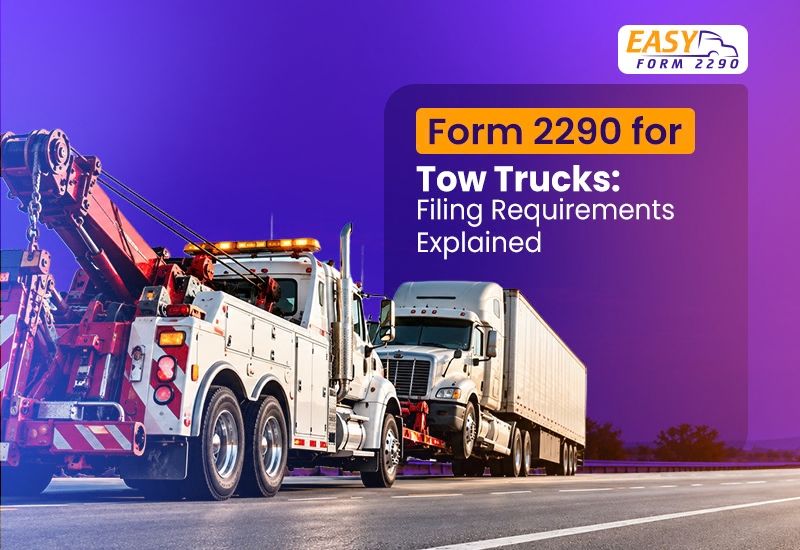


- Form 2290 for tow truckers? Weight decides it, nothing else.
- 55,000 lbs+ wreckers file. Lighter tow trucks usually skip it.
- Under 5,000 miles a year - file suspended, pay zero.
- Government-owned tow trucks? Usually exempt.
- Wrong VIN, wrong weight - bounced filing
Form 2290 for Tow Truckers: Who Actually Needs to File
Tow trucks do not cause as much confusion as you might think, but they tend to be in a variety of sizes. The IRS treats light-duty tow trucks, which remove cars from parking lots, differently than heavy-duty rollback trucks that remove semis off the highway.
Form 2290 doesn't change the rule, but 55,000 pounds or more driven on public highways requires Form 2290. Most commercial towing rollbacks and heavy wreckers that are used are within that threshold. It typically excludes a smaller flatbed or light-duty tow truck that remains well under that weight, even when out on the road each day.
Worth checking the combined weight too, not just the truck alone. If you're regularly towing something heavy enough to push the total over 55,000 pounds, that combination can bring you into taxable territory even when the tow truck by itself wouldn't.
CHECK THIS TO FILE - YOUR FORM 2290
What's Exempt or Doesn't Apply to You
Not all tow trucks that can be found on the road require filing, and a few scenarios are overlooked many times.
Like most government vehicles, government-owned tow trucks (city, county, state owned) are not subject to HVUT. If your tow truck actually doesn't exceed the limit, there's no need to file anything.
No form, no fee, no nothing.
Low-Mileage Tow Trucks - the Suspended Vehicle Option
Here's the one most tow truck owners don't realize applies to them. A lot of local towing operations - repo work, parking enforcement, short local hauls genuinely don't rack up much highway mileage over a full year.
If a tow truck stays under 5,000 highway miles in the tax year, it can be filed as suspended - Category W - and the tax owed comes out to zero. You still have to file Form 2290 for it; that part isn't optional. You just aren't paying anything on it as long as the mileage stays under the limit.
| Vehicle Type | Typically Taxable? | Notes |
|---|---|---|
| Heavy wrecker or rollback, 55,000 lbs+ | Yes | Full HVUT applies |
| Light-duty tow truck, under 55,000 lbs | No | Below the weight threshold |
| Government-owned tow truck | No | Generally exempt |
| Low-mileage tow truck, under 5,000 mi/year | Suspended | Filed at zero tax |
ALSO CHECK - How to File Form 2290 for Interstate Trucking Companies
Filing Steps for Tow Truck Owners
Once you know which bucket your tow truck falls into, the actual filing is nothing new - one EIN, then the VIN and weight category for each vehicle under it.
Double-check the VIN against your registration before submitting - it's the single most common reason a filing gets kicked back. Pick the correct first-use month too, especially if the tow truck was purchased or put into service partway through the year, since that decides your filing window rather than the usual August 31 date.
Keeping It Simple for Your Tow Truck Fleet
Form 2290 for tow truckers isn't really complicated once the weight and mileage numbers are sorted - most of the confusion comes from assuming every tow truck falls under the same rule when they don't.
Check your tow truck's weight and mileage, then file Form 2290 with EasyForm2290 and get your stamped Schedule 1 back the same day.
FAQs
1. Do all tow trucks need to file Form 2290?
No. Only tow trucks at 55,000 pounds or more that travel on public highways. Lighter tow trucks fall below the threshold.
2. Is a government-owned tow truck exempt from Form 2290?
Generally, yes. Government-owned vehicles are typically exempt from HVUT.
3. Can a tow truck be filed as suspended for low mileage?
Yes, if it stays under 5,000 highway miles a year, it can be filed under Category W at zero tax owed.